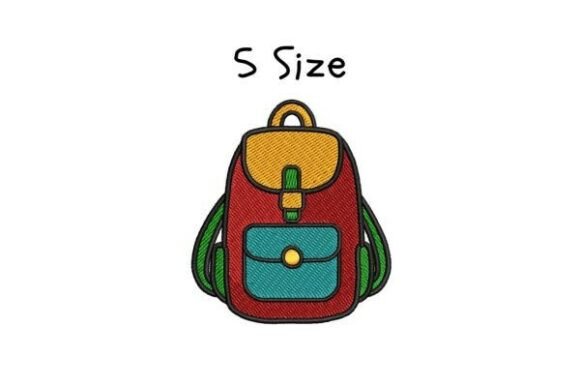
Backpack Embroidery Design
A Designer’s First Look: Charm, Clarity, and Craftsmanship
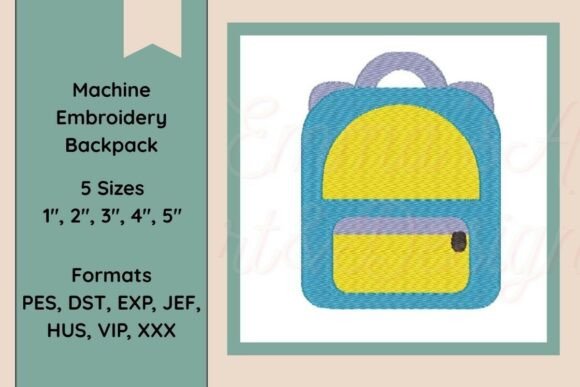
As an embroidery designer who’s tested hundreds of digital embroidery files for gift shops, Etsy sellers, and baby product studios, I opened Backpack Embroidery Design with quiet anticipation—and was immediately struck by its gentle confidence. It’s not loud or overly trendy; instead, it carries a warm, handmade charm—think soft curves, balanced negative space, and subtle detailing that reads as both classic and quietly modern. There’s no forced whimsy or cluttered embellishment. Just clean lines, thoughtful proportion, and a friendly, approachable silhouette that invites personalization. Whether stitched on a linen pillow cover or a cotton baby blanket, this design feels intentional—not generic. That emotional resonance matters deeply when you’re building trust with customers ordering meaningful personalized gifts.
Versatility That Fits Real-Life Gifting Needs
Backpack Embroidery Design shines brightest where sentiment meets utility—exactly where small shop owners and handmade sellers thrive. For baby embroidery? It’s perfect on organic cotton swaddles, muslin lovey squares, or knit nursery blankets—soft enough to cradle, structured enough to hold detail. As a wedding gift, it adds unexpected warmth to monogrammed linen napkins or embroidered kitchen towels gifted to newlyweds starting their first home. I’ve already sketched mockups for tote bags stamped with “Bride Squad” and “Groom’s Gear,” and it works beautifully—especially when paired with minimalist thread colors like oatmeal, slate gray, or dusty rose.
It also bridges seasonal moments without feeling dated. While rooted in Back To School, its simplicity lets it transcend the calendar: use it on aprons for teacher appreciation, pillow covers for dorm rooms, or even embroidered keepsake boxes for graduation. Etsy sellers will appreciate how easily it layers into themed listings—“Nursery Essentials Bundle,” “Custom Teacher Gifts,” or “Modern Wedding Towel Set.” And because it comes in 5 sizes, scaling from a 2-inch backpack on a onesie to a 6-inch statement on a canvas tote is seamless—no redrawing, no guesswork.
Where to Use It Thoughtfully (and Where to Pause)
Like any well-loved machine embroidery design, Backpack Embroidery Design rewards intentionality. Its moderate stitch density means it performs reliably on stable fabrics—but be mindful with texture and tension. On thick terry cloth towels, for example, use cutaway stabilizer + topping to prevent sinking stitches and ensure crisp edges. Avoid stretching it onto highly elastic baby clothes (like ribbed cotton bodysuits) unless you test extensively—fabric recovery can distort fine outlines.
Small lettering isn’t part of this design, so no concerns there—but if you plan to add custom text (e.g., a child’s name below the backpack), keep font size above 8mm and choose a clean, condensed embroidery font. Also, avoid dense stitching on curved surfaces like rounded mug cozies or deep pillow inserts—the design’s flat geometry works best on smooth, taut fabric. Dark fabrics? Absolutely viable—just verify thread color contrast in your mockup; light ecru or heather gray thread pops softly without glare. And for products destined for frequent washing (baby blankets, kitchen towels), confirm your thread is high-quality polyester and your stabilizer fully bonds—not just adheres—to prevent puckering over time.
Why This Design Elevates Your Finished Product
Customers don’t buy embroidery—they buy meaning, memory, and care. Backpack Embroidery Design supports that instinct effortlessly. Its clean aesthetic photographs beautifully, especially in natural light: think folded blanket corners, towel rolls draped over rustic shelves, or tote bags slung over café chairs. That visual clarity builds buyer confidence before they click “Add to Cart.” It also signals handmade quality—not because it’s fussy, but because it’s precise, balanced, and clearly designed *for fabric*, not just screen display.
For small shop owners, that translates directly to perceived value. A customer paying $48 for a personalized pillow cover expects heirloom-level execution—and this design delivers that baseline polish. When used consistently across product lines (e.g., matching backpack + initials on a baby blanket and coordinating towel), it strengthens brand cohesion and repeat purchase potential. And for Etsy sellers? It’s a low-risk, high-return digital embroidery file—scalable, licensable, and emotionally resonant without requiring complex storytelling in the listing.
Practical Notes Every Embroiderer Should Run Before Stitching
Before sending Backpack Embroidery Design to your hoop, here’s what I do—every single time:
- Test on scrap fabric that matches your final product’s weight and weave—especially critical for textured or stretchy materials.
- Check thread color contrast using a printable mockup or fabric swatch under real lighting (not just screen preview).
- Confirm hoop size compatibility—the largest version may require a 6x10” or larger hoop; verify before digitizing adjustments.
- Review stitch density visually in your embroidery software—look for tight clusters that might cause fabric distortion or thread breaks.
- Use proper stabilizer: medium-weight cutaway for knits, tear-away for stable wovens, and cutaway + topping for towels or napped fabrics.
- Compare light and dark fabric mockups side-by-side to assess legibility and emotional tone—same design, different impact.
- Inspect small details post-stitch: check for skipped stitches in curves or thin stems, and trim jump threads carefully.
- Confirm commercial licensing before selling finished products—this file is marketed for embroidery use, but always recheck terms in the download folder (🔍 📂 WHAT YO likely contains key license notes).
Ultimately, Backpack Embroidery Design isn’t just another digital embroidery file—it’s a thoughtful tool for makers who believe personalized gifts should feel as special to create as they are to receive. Whether you're stitching for a newborn’s first backpack-themed nursery, curating a Back To School collection for your boutique, or building a cohesive Etsy shop around heartfelt handmade products, this design earns its place in your library—not because it’s flashy, but because it’s reliable, resonant, and quietly full of heart.