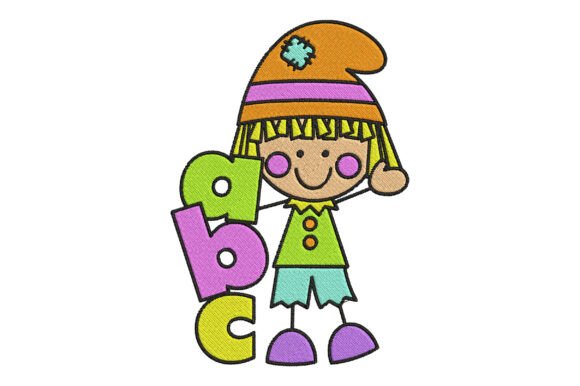
Cute Elf ABC Embroidery Design
First Impressions: Playful, Warm, and Purpose-Built for Little Learners
When I opened the Cute Elf ABC Embroidery Design file, what struck me first wasn’t just the charm—but the intentionality. There’s a gentle rhythm to the layout: a smiling child (not overly stylized, not cartoonishly exaggerated) holding a backpack, with each letter of the alphabet arranged organically around them like confetti, school supplies, or tiny learning milestones. It doesn’t scream “busy”; it hums with quiet joy. That matters—especially when you’re stitching for preschoolers, daycare centers, or parents who want embroidery that feels nurturing, not overwhelming. This isn’t a generic alphabet border. It’s a machine embroidery design with narrative weight.
Real-World Test: A Personalized Tote Bag for Back To School Prep
Last week, I stitched the Cute Elf ABC Embroidery Design onto a natural cotton canvas tote for a local teacher’s boutique. We placed it centered on the front panel, sized to 4.2" wide—just under the maximum hoop clearance for most mid-arm machines. The result? Instant warmth. Parents paused at the booth, smiled, and said, “That’s *exactly* what my kindergartener would love.” Not because it’s flashy—but because it reads as handmade, thoughtful, and age-appropriate. The letters aren’t cramped; they breathe. The elf’s face has soft satin stitch shading—not too dense, not too flat—and the backpack’s zipper detail uses a clean running stitch that held up beautifully on medium-weight fabric.
Where It Shines (and Where It Asks for Care)
The Cute Elf ABC Embroidery Design excels in projects where personality and clarity matter more than precision engineering:
- Custom apparel: Works beautifully on sweatshirt fronts, crewneck tees, and baby onesies—especially when paired with light stabilizer and low-loft cutaway.
- Embroidered patch: Clean outer edges and balanced fill stitch density make it ideal for iron-on or sew-on patches used on backpacks, lunchboxes, or classroom banners.
- Baby embroidery: The rounded shapes and friendly proportions translate well to burp cloths, swaddle blankets, and nursery wall hangings—no sharp angles or fussy details that snag during washing.
- Holiday embroidery & personalized gifts: Add a subtle red-and-green thread variation for Christmas, or pastel pinks and blues for baby showers—it adapts without losing its core identity.
But—and this is key—don’t rush it onto textured fabrics like terry cloth or heavy fleece without testing. The small lettering (especially Q, R, and G) relies on consistent stitch definition. On stretchy knit t-shirts or thin rayon blends, those letters can blur if stabilizer choice or hooping tension isn’t dialed in. And while the design reads well on light fabric, avoid dark backgrounds unless you’ve verified thread color contrast in your own test run—some digital previews oversaturate the “colorful” claim.
What It Does for Your Craft Business—Beyond the Stitch
As an Etsy seller and small shop product developer, I look beyond how a design stitches—I ask how it *performs* in the buyer’s world. The Cute Elf ABC Embroidery Design builds trust. When customers see that cheerful elf and clearly legible letters on a finished product, they don’t just see embroidery—they see care. That lifts perceived value on handmade products, especially in competitive niches like Back To School or baby gifts. It also supports brand consistency: pair it with simple fonts and muted coordinating thread palettes across your listings, and suddenly your shop feels cohesive—not like a collection of random designs.
It’s also gift-ready out of the gate. No extra embellishment needed. A tea towel with this design stitched near the hem? Instant teacher appreciation gift. A pillow cover for a toddler’s room? Done. That ease translates directly to faster turnaround and fewer revisions—critical when you’re juggling custom orders alongside craft fair prep or seasonal launches.
Designer Notes You’ll Actually Use
Before committing to a full production run—or listing it as part of your digital embroidery file shop—here’s what I recommend:
- Test on scrap fabric first, using the exact stabilizer and thread you plan to sell with. Cotton twill behaves differently than organic linen.
- Check stitch density visually—zoom in on the elf’s hands and the backpack strap. If fill areas look muddy or overly dense, adjust underlay or reduce density slightly in your editing software.
- Confirm hoop size compatibility. This design fits comfortably in a 5x7 hoop, but pushing it into a 4x4 means sacrificing letter legibility. Don’t force it.
- Inspect small details in black-and-white mockups. Color can mask weak contrast—see how the letters hold up in grayscale before finalizing your product photos.
- Use proper stabilizer: medium-weight cutaway for stable wovens, tear-away + light cutaway hybrid for knits. Skip the no-stabilizer experiments here—the backpack’s curved lines need support.
- Verify licensing. Since this is intended for commercial embroidery and craft business use, confirm whether the purchase includes rights to sell finished products (yes, typically), and whether resale of the digital embroidery file itself is permitted (usually no—check the terms).
Final Thought: It’s Not Just Cute—It’s Considered
The Cute Elf ABC Embroidery Design earns its place in my working library not because it’s trendy, but because it’s considered. It understands scale, readability, and emotional resonance—all things that separate a quick stitch from a meaningful finished product. Whether you’re embroidering a single apron for a Montessori classroom or building a line of personalized kids’ apparel, this design gives you room to be both professional and personal. It doesn’t shout. It invites. And in a market saturated with loud, overdesigned assets, that quiet confidence is rare—and valuable.