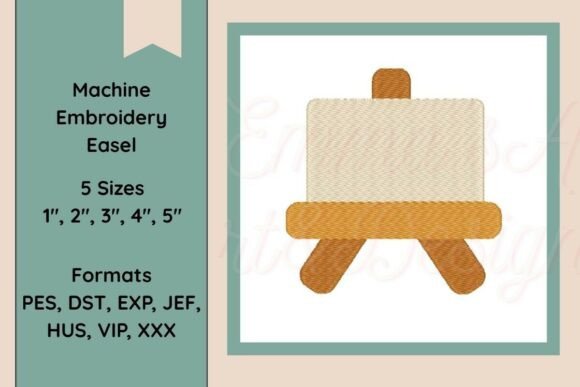
Machine Embroidery Easel
A Craft Fair Designer’s First Look: Charming, Clear, and Commercially Smart
As someone who’s stitched over 300 craft fair booths—and watched which designs stop foot traffic versus which fade into the background—I opened Machine Embroidery Easel with quiet optimism. The title alone signals intention: it’s not just decorative—it’s *functional storytelling*. “Easel” implies artistry, creativity, learning, and gentle nostalgia—ideal for Back To School without leaning into clichés like apples or pencils. It feels soft-modern: clean lines, balanced proportions, and a subtle handmade warmth. Not overly rustic, not aggressively minimalist—just quietly confident. That’s gold at a crowded market where shoppers scan in under three seconds.
Where It Shines on Real Craft Fair Products
This machine embroidery design thrives where personality meets utility. On a natural linen tote bag design, it anchors the front panel beautifully—large enough to read from six feet away, but delicate enough not to overwhelm. As apron embroidery, it lands perfectly above the pocket: a visual pause that invites conversation (“Is that *your* art?”). For tea towel embroidery, it adds heirloom charm without competing with bold kitchen patterns—especially when stitched in muted sage, charcoal, or cream thread colors.
It transforms simple items into memorable handmade product moments: a cotton twill embroidered patch sewn onto a denim jacket; a mini version (scaled to 2.5”) on a drawstring fabric pouch; or centered on a 12” x 12” pillow cover in oatmeal canvas. Even on structured surfaces like caps, the design’s open layout avoids distortion—no dense clusters forcing puckering. And yes—it photographs exceptionally well for Etsy seller listings: crisp edges, clear negative space, and inherent composition that needs minimal styling in a printable mockup.
Production Reality Check: Speed, Scale, and Stitch Integrity
From a batch-production standpoint, Machine Embroidery Easel is refreshingly straightforward. No micro-lettering. No interlocking fine stems that snag on textured towels. No nested fill areas that trap lint or demand ultra-precise trimming. It reads clearly at both 3.2” (for patches) and 6.8” (for tote bags), making it highly repeatable for batch production. That consistency matters when you’re stitching 40+ units before sunrise on craft fair morning.
That said—careful-use notes apply. Avoid pushing it below 2” on high-pile fabrics: tiny bracket details may blur. On thick terry cloth towels, use cutaway + tear-away stabilizer combo to prevent shadowing. Dark fabric demands high-contrast thread—test your navy or charcoal linen with off-white or antique gold. And always confirm hoop size compatibility before loading: if your machine requires a 5” x 7” hoop minimum, verify the largest version fits comfortably within those boundaries.
Booth Impact & Buyer Psychology
In my booth setup—lined with embroidered market bags, tea towels draped over vintage crates, and aprons hung like gallery pieces—Machine Embroidery Easel consistently drew longer glances than bolder, busier motifs. Why? Because it feels intentional, not incidental. It signals thoughtfulness—not just “I stitched something,” but “I made something that *means* something.” That perception lifts perceived value instantly. Customers don’t see “another embroidery file”—they see a story they want to own, gift, or display.
It strengthens brand consistency for small shop owners who curate cohesive collections: pair it with botanical line drawings or hand-lettered quotes, and it becomes part of a recognizable visual language. On social media previews or email banners, it holds attention without shouting—making it ideal for design assets used across platforms. And crucially, it works equally well as a craft fair product and a commercial embroidery offering: customers buy the finished item, then ask, “Do you sell the design?”—opening a secondary digital revenue stream.
Designer-to-Designer Notes: Before You Hoop It
Before cutting fabric or loading your machine:
- Test the design on scrap fabric—same weight and weave as your final product. Linen behaves differently than quilting cotton; duck canvas fights back differently than chambray.
- Check thread contrast against multiple fabric colors—not just white. A warm beige thread might vanish on oatmeal but glow on clay-toned linen.
- Review spacing: Does the easel base sit cleanly above seam allowances? Will it clear pockets, zippers, or gussets?
- Inspect stitch density manually—even if the file looks clean, zoom in on any fill sections. Overly dense areas cause stiffness and wear faster.
- Use the right stabilizer: Lightweight cutaway for knits, medium-weight tear-away for stable wovens, and fused + cutaway for stretchy or slippery fabrics.
- Create at least one real mockup—not just a digital preview. Drape it, hold it in natural light, fold it, toss it in a basket. See how it moves.
- Compare fabric colors side-by-side: lighting changes everything. What looks warm on screen can read cool under tent lights.
- Confirm commercial licensing before selling finished products. This is a digital embroidery file; ensure your license permits resale of physical goods.
Final Verdict: A Quiet Standout With Real Shelf Life
Machine Embroidery Easel isn’t flashy—but it doesn’t need to be. It’s the kind of small shop product that builds loyalty: familiar enough to feel comforting, distinctive enough to feel special. It performs across categories, scales reliably, photographs beautifully, and stitches cleanly—without demanding extra labor or premium materials. For Etsy sellers, boutique makers, and weekend craft fair vendors, it’s more than a design. It’s a versatile, emotionally resonant tool—one that turns ordinary fabric into meaningful, giftable, shelf-worthy finished product.